Contractor working capital: how to fund a job before the first draw
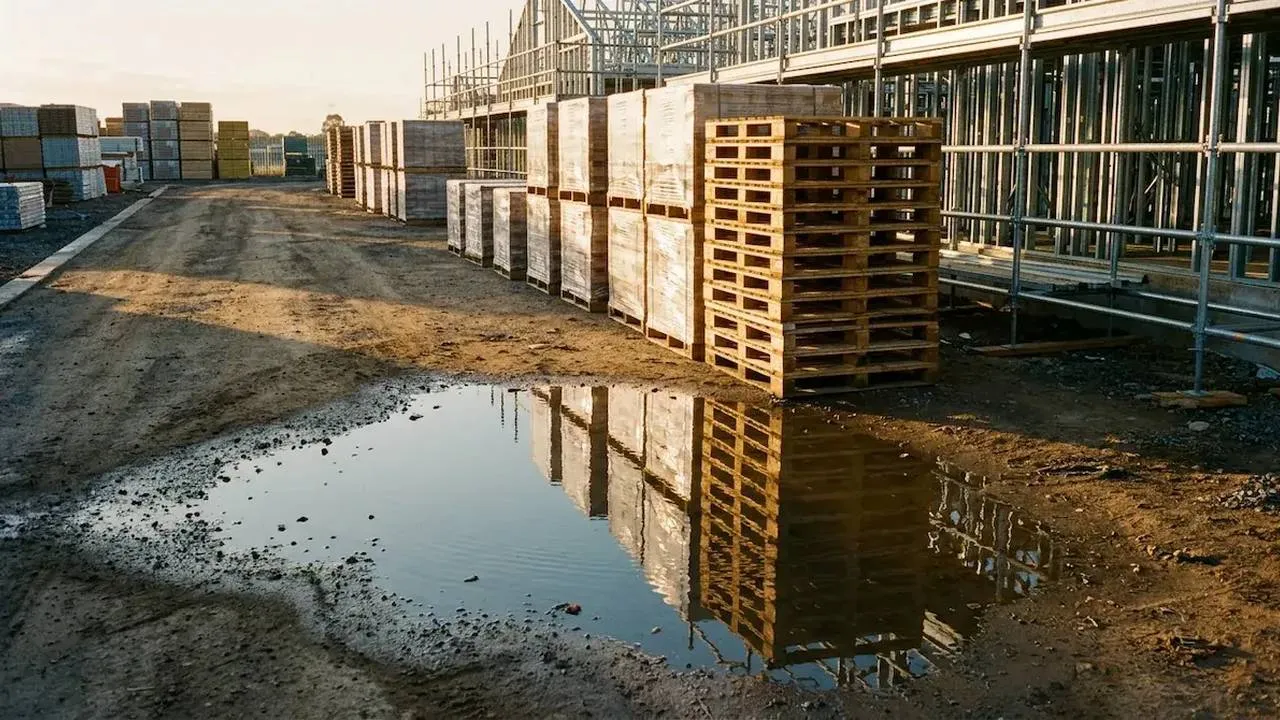
Every contractor knows the pattern. You win the job, order materials, put a crew on site and start spending. The first pay application goes in weeks later, gets reviewed, maybe gets sent back, and finally pays, minus retainage. Your costs started on day one.
That gap is why contractor working capital matters more in construction than in almost any other trade. The work can be profitable and the company can still run short. This guide covers the main ways to fund it.
Map the gap before you fund it
Before choosing a product, sketch the cash flow for the job:
- Week by week, list what you’ll pay: materials, labor, equipment rental, subs, insurance and bonding costs.
- List when you expect to be paid: based on the contract’s billing cycle and the GC’s or owner’s real track record, not the contract language.
- Subtract retainage from each payment until it’s released.
- Find the low point. The deepest point of the gap is the amount of working capital the job needs.
Do this for each active job and add them up. The total, plus a cushion for weather and change-order delays, is what you need to have available, whether in cash or credit.
This also helps you bid. A job that looks profitable on paper can be a cash drain if the payer is slow.
Option 1: A business line of credit
For most contractors, a revolving line is the core tool. Draw when you mobilize, repay as progress payments come in, and draw again on the next job.
Falcon’s Business Line of Credit:
- Amounts: $10,000–$500,000
- Terms: Revolving
- Requirements: 6+ months in business, $10K+ monthly revenue, an active bank account
Because construction gaps repeat on every job, a line fits better than taking a new lump-sum loan each time. You only pay for what you’ve drawn.
Option 2: Invoice factoring on approved work
When the problem is waiting on approved invoices, invoice factoring can turn them into cash now:
- Who it’s for: B2B businesses with invoices to creditworthy clients
- Amounts: $10,000–$3,000,000
- Terms: Ongoing facility
- Requirements: B2B invoices, creditworthy customers, 3+ months in business
Factoring in construction has some wrinkles to ask about:
- Retainage usually can’t be advanced until it’s released.
- Pay-when-paid or pay-if-paid clauses in subcontracts affect how a factor views the invoice.
- Lien waivers and progress-billing documentation need to be in order.
- Customer credit matters. A factor is underwriting the GC or owner who pays you.
For subcontractors working for large, creditworthy GCs, factoring can scale with the work in a way a fixed line can’t. Our post on factoring vs. AR financing explains the difference between the two.
Option 3: Equipment financing instead of cash purchases
Buying a machine outright with working capital can leave you short for the next mobilization. Collateral & Asset Loans spread the cost of equipment over its useful life:
- For: excavators, skid steers, lifts, work trucks, trailers and tools
- Amounts: $10,000–$1,000,000
- Terms: 12–60 months
- Requirements: an equipment quote or invoice, 6+ months in business, an active business
A useful test: if you’re renting the same machine job after job, compare the monthly rental total with a financing payment. Our equipment break-even guide walks through that math.
Option 4: A term loan for a one-time push
When you’re making a single, defined investment, such as a yard, an office, a larger bonding program or a crew expansion for a multi-year contract, a Business Term Loan may fit:
- Amounts: $10,000–$5,000,000
- Terms: 6–60 months
- Requirements: 6+ months in business, $15K+ monthly revenue, 550+ credit score
What about merchant cash advances?
A Merchant Cash Advance funds fast, but it’s expensive and its frequent repayments pull from your deposits on a fixed rhythm. Construction deposits are lumpy, arriving with each draw. That mismatch can make an MCA especially painful for contractors. If you already carry several, Consolidation of Positions can combine them and aims to cut current daily or weekly payments, in some cases by 30%–50%. See our post on stacked advances.
Public work in New York City
Public projects often pay reliably but slowly. If you work on New York City contracts, the City runs a Contract Financing Loan Fund for eligible contractors; check its current terms and eligibility directly with NYC Small Business Services. It can sit alongside private working capital.
Growing into bigger jobs
The jump from smaller residential or service work to larger commercial contracts is where many contractors feel the squeeze most. Bigger jobs usually mean longer billing cycles, stricter documentation, retainage and more crew and material committed before the first payment. Before you bid on a job that is much larger than your usual work, run the cash map for it on its own. If the low point is bigger than your available cash plus credit, either line up the financing first, negotiate a mobilization payment, or bid the job in phases. Winning a job you can’t fund through to the first draw is riskier than losing the bid.
Habits that reduce how much you need
- Bill on time, every time. A late pay application pushes the whole cycle back.
- Get change orders signed before doing the work.
- Negotiate deposits or mobilization payments on new contracts where you can.
- Track each payer’s real payment time and price slow payers accordingly.
- Keep retainage visible in your cash forecast, not just your receivables.
Preparing your file
Lenders mostly read your business bank statements. Construction deposits are naturally uneven, so it helps to bring a short job list with contract values, billing schedules and expected payments. Also gather:
- Recent business bank statements, complete PDFs
- An accounts receivable aging report (for factoring)
- Owner ID and business details
- A list of existing loans, equipment notes and advances
- For equipment, the dealer quote
See the funding checklist for the full list.
The short version
A line of credit covers the repeating gap on every job. Factoring turns approved invoices into cash. Equipment financing keeps machine purchases from draining working capital. Run scenarios in the loan calculator, see our construction business loans page, or apply with your current job list.
Frequently asked questions
What is contractor working capital?
It is the cash a contracting business uses to buy materials, pay crews and cover overhead while waiting for progress payments, retainage and final payment.
Can subcontractors use invoice factoring?
Often yes, when invoices are for completed, approved work billed to a creditworthy general contractor or commercial owner. Retainage, lien waivers and pay-when-paid clauses affect what can be factored.
How much working capital does a construction job need?
Roughly the costs you will pay before the first payment clears, plus a cushion for delays. Map materials, labor and equipment by week against the expected payment schedule.
What does Falcon require for a contractor line of credit?
Falcon's Business Line of Credit requires 6+ months in business, $10K+ in monthly revenue and an active bank account, for amounts from $10,000 to $500,000.